
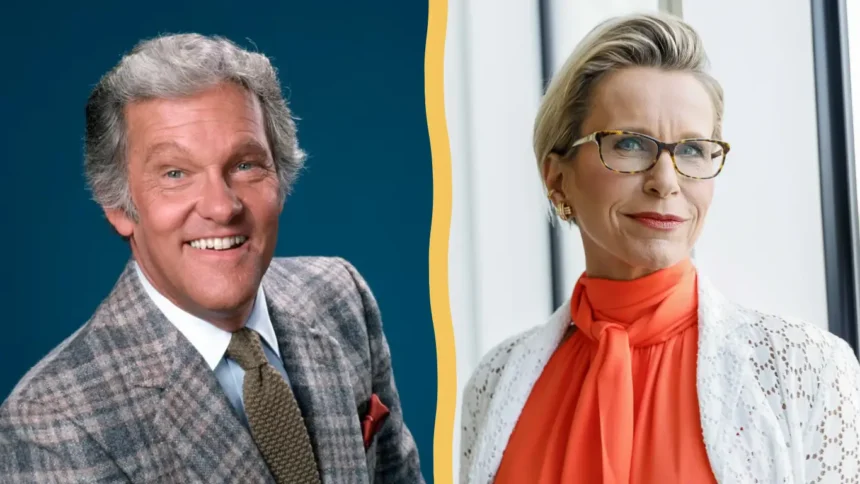
Tom Kennedy and Emma Walmsley are two accomplished business leaders whose careers developed in very different industries. Kennedy built his reputation through engineering, aerospace, defense technology, and corporate management, while Walmsley established herself through international marketing, consumer healthcare, pharmaceuticals, and executive leadership.
Their professional journeys are interesting because neither followed a conventional straight path to the top. Kennedy began as an engineer and eventually became chairman and CEO of Raytheon. Walmsley started her career in marketing at L’Oréal before moving into healthcare and ultimately becoming CEO of GSK.
There is no widely documented personal relationship or major business partnership between Tom Kennedy and Emma Walmsley. Their names are better understood through their individual careers, leadership experiences, and the different industries in which they made their mark.
Who Is Tom Kennedy?
Tom Kennedy, formally Thomas A. Kennedy, is an American engineer and business executive best known for his long career at Raytheon.
Kennedy joined Raytheon in 1983, beginning his career in radar development. Over more than three decades, he moved through engineering, program management, business leadership, and executive positions.
His career is particularly notable because he maintained a strong technical foundation while gradually taking on broader corporate responsibilities. He eventually became one of the most senior leaders in the aerospace and defense industry.
Kennedy’s story is therefore not simply about becoming a CEO. It is also about how technical knowledge can develop into organizational and strategic leadership.
Tom Kennedy’s Early Life and Education
Kennedy’s educational background was strongly connected to engineering.
He earned a bachelor’s degree in electrical engineering from Rutgers University and later received a master’s degree in electrical engineering from the Air Force Institute of Technology.
He went on to earn a doctorate in engineering from the University of California, Los Angeles.
This academic foundation prepared him for a career involving complex technological systems.
Before establishing his long-term corporate career, Kennedy also served in the U.S. Air Force. He reached the rank of captain and worked with satellite launch vehicle avionics development and production programs.
His combination of military experience and advanced engineering education became an important part of his professional development.
Tom Kennedy’s Beginning at Raytheon
Kennedy joined Raytheon in 1983 and initially worked in radar development.
At the time, Raytheon was already an established technology and defense company, so Kennedy entered an organization where advanced engineering was central to its operations.
Over the years, he worked on radar and electronic warfare programs and became involved in increasingly complex projects.
His technical work eventually expanded into management responsibilities.
He held positions including vice president of Tactical Airborne Systems and president of Raytheon’s Integrated Defense Systems business.
These roles required more than engineering knowledge. Kennedy also had to understand customers, budgets, business strategy, operations, international markets, and large teams.
Tom Kennedy Becomes Raytheon CEO
Kennedy became Raytheon’s chief executive officer in March 2014.
Seven months later, he also became chairman.
His appointment represented the culmination of more than three decades with the company.
By this stage, Kennedy had experience across several areas of the organization, giving him an unusually broad understanding of Raytheon’s technology and business operations.
As CEO, his responsibilities included guiding the company through changing defense requirements, technological development, international business opportunities, and increasing competition.
His earlier experience in radar and electronic systems remained relevant even as his role became more strategic.
Kennedy’s Leadership and Technology Focus
Technology remained a central part of Kennedy’s professional identity.
His career included work involving radar, electronic warfare, airborne systems, cybersecurity, and other advanced defense technologies.
He also held patents connected with technology developed during his career.
One of the notable achievements associated with his technical work was his involvement with Active Electronically Scanned Array radar technology.
This background helped distinguish Kennedy from executives who entered corporate leadership primarily through finance or marketing.
He had firsthand experience with the technology behind many of the businesses he eventually managed.
Raytheon and the United Technologies Merger
One of the biggest corporate developments during Kennedy’s later career was the combination of Raytheon and United Technologies.
The transaction was completed in 2020, creating Raytheon Technologies.
Kennedy became executive chairman of the newly formed company, while Greg Hayes became chief executive officer.
Kennedy later stepped away from the executive chairman role in 2021.
His departure marked the end of one of the longest and most significant chapters of his professional career.
Even after leaving executive leadership, he continued to have involvement in corporate governance and board-level responsibilities.
Who Is Emma Walmsley?
Emma Walmsley is a British business executive who became internationally recognized through her leadership of GSK.
She served as GSK’s chief executive from April 2017 through December 2025.
Before joining the pharmaceutical company, Walmsley spent 17 years at L’Oréal, where she developed extensive experience in marketing, general management, consumer products, and international business.
Her career is particularly interesting because she did not begin in pharmaceutical science or medicine.
Instead, she developed her leadership skills through commercial and consumer-focused roles before moving into healthcare.
Emma Walmsley’s Early Life
Emma Natasha Walmsley was born in England in June 1969.
She attended St Swithun’s School in Winchester before studying classics and modern languages at the University of Oxford.
Her academic background was therefore very different from Kennedy’s engineering education.
Rather than entering a technical field immediately after university, Walmsley began building a career around international business, marketing, and consumer products.
That early experience eventually became a foundation for her work in the healthcare industry.
Emma Walmsley at L’Oréal
Walmsley spent 17 years working for L’Oréal.
During that period, she held marketing and general-management positions across several markets, including the United Kingdom, Europe, the United States, and China.
Her international experience became especially important during her time in Shanghai.
She became general manager of L’Oréal’s consumer-products business in China and worked with major international brands.
This experience gave her exposure to consumer behavior, brand development, marketing strategy, international management, and business growth.
It also prepared her for senior leadership in another multinational organization.
Emma Walmsley Joins GSK
Walmsley joined GSK in 2010 after leaving L’Oréal.
She initially became involved with GSK’s consumer healthcare business and gradually took on larger responsibilities.
In 2015, she became CEO of GSK Consumer Healthcare.
Her performance in this role helped establish her as a candidate for the company’s top position.
In September 2016, GSK announced that Walmsley would succeed Andrew Witty as chief executive.
She officially became CEO in April 2017.
Her appointment was notable because she became the first woman to lead the major pharmaceutical company.
Emma Walmsley’s Years as GSK CEO
Walmsley led GSK during a period of substantial corporate transformation.
One of the biggest developments involved the company’s consumer healthcare operations.
GSK’s consumer healthcare business was eventually separated and combined with Pfizer’s consumer healthcare operations to create Haleon.
Haleon became an independent publicly listed company in 2022.
Following the separation, GSK became more focused on biopharmaceuticals, particularly vaccines and specialty medicines.
This meant that Walmsley’s years as CEO were associated with a major change in the company’s structure and strategic direction.
GSK’s Focus Under Walmsley
During Walmsley’s leadership, GSK placed considerable emphasis on vaccines and specialty medicines.
The company operated across areas including respiratory disease, infectious diseases, HIV, oncology, and immunology.
This was a significant shift from the broader consumer-healthcare identity that existed before the creation of Haleon.
Walmsley’s background in consumer products may initially have appeared unusual for the leader of a major pharmaceutical company.
However, her experience in international management, branding, commercial strategy, and large organizations became part of her executive profile.
Emma Walmsley’s Departure From GSK
Walmsley’s tenure as GSK CEO ended on December 31, 2025.
Luke Miels succeeded her as chief executive at the beginning of 2026.
Walmsley’s nine-year period at the top of GSK represented a major chapter in the company’s modern history.
After leaving the CEO role, she continued her involvement in corporate governance and remained a board director of Microsoft.
Her post-GSK career therefore continued to keep her connected to major international business organizations.
Tom Kennedy and Emma Walmsley: Two Different Career Journeys
Tom Kennedy and Emma Walmsley reached senior corporate leadership through very different professional backgrounds.
Kennedy’s career developed from engineering and military service into technology management and eventually the leadership of Raytheon.
Walmsley’s career developed through international marketing and consumer products before moving into healthcare and pharmaceutical leadership.
Kennedy spent decades developing expertise in complex technical systems.
Walmsley developed expertise in international business, consumers, brands, and commercial strategy.
These different backgrounds demonstrate that corporate leadership can develop from many professional disciplines.
A CEO does not necessarily begin as a CEO. Both Kennedy and Walmsley spent years accumulating knowledge and responsibility before reaching the highest levels of their organizations.
The Importance of Technical Expertise
Kennedy’s career provides a strong example of technical expertise becoming a foundation for executive leadership.
He worked directly with radar and electronic warfare systems before becoming responsible for major business divisions.
This meant that he understood the technological side of Raytheon’s operations as well as the commercial responsibilities of running a large organization.
His progression also demonstrates the importance of learning beyond one’s original specialization.
Engineering gave Kennedy his foundation, but executive leadership required knowledge of finance, operations, customers, employees, contracts, and strategy.
The Importance of International Experience
Walmsley’s career highlights a different form of professional development.
Her work at L’Oréal gave her experience in multiple countries and business environments.
Working across international markets exposed her to different consumers, cultures, commercial systems, and competitive conditions.
When she moved to GSK, that international experience became valuable in managing a multinational healthcare company.
Her career demonstrates how skills developed in consumer products can transfer into another major industry.
Their Approach to Professional Growth
Kennedy spent much of his career within one major organization.
He joined Raytheon in 1983 and continued rising through the company for decades.
Walmsley followed a more varied path.
She spent 17 years at L’Oréal before moving to GSK, where she progressed through consumer healthcare into the CEO position.
These different approaches show that career development can occur through either long-term progression within one organization or movement between major companies and industries.
Leadership Beyond the CEO Role
Neither career ended simply with leaving the chief executive position.
Kennedy continued participating in corporate governance after his Raytheon career.
Walmsley also moved into board-level leadership, including her position on Microsoft’s board.
Board work differs from executive management.
A CEO is directly responsible for managing an organization, while a board director participates in oversight, governance, strategic discussion, and accountability.
This transition can allow experienced executives to continue contributing their knowledge without managing day-to-day operations.
Is There a Connection Between Tom Kennedy and Emma Walmsley?
There is no widely documented personal relationship between Tom Kennedy and Emma Walmsley.
They are not publicly known as relatives, and there is no major business partnership that connects their careers.
Their names are more appropriately discussed together because both became leaders of major international corporations.
Kennedy’s professional story is connected primarily with Raytheon and aerospace and defense technology.
Walmsley’s career is connected with L’Oréal, GSK, healthcare, pharmaceuticals, and corporate governance.
Any claim that they had a close personal or business relationship would require specific evidence and should not be assumed simply because their names appear together.
Tom Kennedy’s Professional Legacy
Kennedy’s career is notable for its combination of engineering expertise and corporate leadership.
He spent more than 30 years at Raytheon and worked across multiple areas of the business before becoming CEO.
His work in radar and defense technologies gave him a technical foundation that remained important throughout his executive career.
His time as CEO also coincided with significant changes in aerospace and defense, including technological developments, international expansion, and industry consolidation.
The creation of Raytheon Technologies in 2020 became one of the final major corporate events of his executive career.
Emma Walmsley’s Professional Legacy
Walmsley’s legacy is strongly associated with the transformation of GSK.
She entered the company after a long career in consumer products and eventually became its CEO.
Her leadership coincided with the separation of consumer healthcare from GSK and the development of Haleon as an independent company.
She also oversaw a period in which GSK increasingly concentrated on biopharmaceuticals, vaccines, and specialty medicines.
Her career demonstrates how commercial leadership can transfer into one of the world’s most complex science-driven industries.
Personal Life and Family
Public information about Tom Kennedy’s personal life is relatively limited compared with his professional biography.
The available information about him focuses primarily on his education, military service, engineering work, Raytheon career, and corporate leadership.
Emma Walmsley’s personal background is somewhat better documented.
She married David Owen in 1995, and they have four children. She has generally kept her family life separate from her professional responsibilities.
Her public profile has largely centered on corporate leadership rather than celebrity-style coverage.
This difference is understandable because Kennedy and Walmsley developed their reputations primarily through business rather than entertainment.
Case Study: Two Routes to Corporate Leadership
Tom Kennedy and Emma Walmsley provide an interesting case study in professional development.
Kennedy demonstrates how a technical specialist can gradually expand into general management.
His career began with engineering and radar development, progressed through increasingly senior positions, and eventually placed him at the head of a major defense company.
Walmsley’s journey demonstrates how commercial experience can lead to leadership in a highly specialized industry.
She started in marketing and consumer products, gained international management experience, entered healthcare, and eventually became CEO of one of the world’s largest pharmaceutical companies.
The two careers show that there is no single educational or professional route to executive leadership.
Technical expertise, commercial knowledge, international experience, communication skills, and organizational management can all become valuable foundations for senior leadership.
Frequently Asked Questions (FAQs)
Who is Tom Kennedy?
Tom Kennedy is an American engineer and former senior aerospace and defense executive. He served as chairman and CEO of Raytheon and spent more than three decades with the company.
Who is Emma Walmsley?
Emma Walmsley is a British business executive who served as CEO of GSK from 2017 through December 2025. Before joining GSK, she spent 17 years at L’Oréal.
Are Tom Kennedy and Emma Walmsley related?
There is no established public evidence that Tom Kennedy and Emma Walmsley are related.
Did Tom Kennedy and Emma Walmsley work together?
There is no widely documented major business partnership between Kennedy and Walmsley.
What did Tom Kennedy do before becoming CEO?
Kennedy began at Raytheon in engineering and radar development. He later held several senior positions, including leadership of Integrated Defense Systems and the role of chief operating officer.
What did Emma Walmsley do before becoming CEO of GSK?
Walmsley spent 17 years at L’Oréal in marketing and general-management roles before joining GSK in 2010.
What is Tom Kennedy’s educational background?
Kennedy holds degrees in electrical engineering from Rutgers University and the Air Force Institute of Technology, as well as a doctorate in engineering from UCLA.
What did Emma Walmsley study?
Walmsley studied classics and modern languages at the University of Oxford.
Final Thoughts
Tom Kennedy and Emma Walmsley built their careers in completely different professional environments, yet both eventually reached the highest levels of corporate leadership.
Kennedy developed from an engineer and military officer into a senior aerospace and defense executive. His decades at Raytheon gave him extensive experience in radar, electronic warfare, business operations, technology, and corporate strategy.
Walmsley followed another route. Her early career at L’Oréal gave her international experience in marketing and consumer products before she moved into GSK and eventually became its CEO. Her tenure included major changes to GSK’s structure and strategic direction.
There is no established direct relationship between the two. Their stories are valuable because they demonstrate two different ways professional expertise can evolve into executive leadership.
From engineering and defense technology to international marketing and pharmaceuticals, Tom Kennedy and Emma Walmsley show how long-term experience, adaptability, and increasing responsibility can shape remarkable corporate careers.
For More Visits: Trendifymagazine